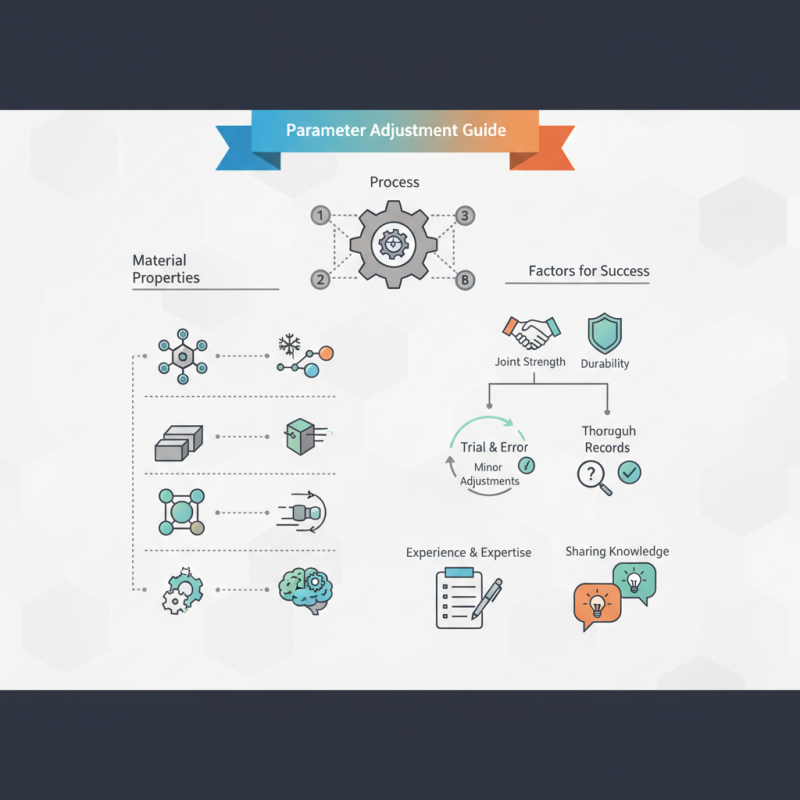
When engaging in plastic welding, selecting the right parameters is crucial. This process demands a deep understanding of various types of plastic materials. Each material comes with unique properties that affect the welding outcome. For successful results, knowing how to adjust parameters for different plastic welding materials is essential.
Adjusting parameters can involve factors like temperature, pressure, and speed. Careful calibration can enhance joint strength and durability. However, it’s important to note that there is no one-size-fits-all approach. Trial and error play a significant role in achieving the best results. Often, minor adjustments can lead to significant improvements.
Understanding the intricacies of plastic welding requires experience and expertise. Even seasoned welders sometimes find themselves reevaluating their techniques. This reflection is necessary as each project presents different challenges. Keeping thorough records of adjustments can provide valuable insights for future work. By sharing tips and experiences, professionals can improve overall practices in the field of plastic welding.
Understanding the Importance of Parameter Adjustments in Plastic Welding
Adjusting parameters in plastic welding is crucial for achieving strong, reliable joints. The process involves various factors, including temperature, pressure, and speed. Each parameter can significantly influence the final result. For example, excessive heat can lead to material degradation, while insufficient pressure may result in weak bonds. Understanding these elements helps in refining techniques.
Experience plays a vital role in plastic welding. As welders gain experience, they develop an intuition for the best settings. Trial and error can sometimes lead to surprising insights. Sometimes, even small adjustments can yield significant improvements. One welder might find that a slight increase in temperature enhances flow, while another may prefer a cooler setting to maintain material integrity.
However, exact parameter settings can vary between different materials. It's essential to study the specific characteristics of each type of plastic. Not all plastics behave the same way under heat and pressure. Keeping an open mind about past methods is crucial for growth. Regularly revisiting and revising techniques can lead to new innovations in the welding process.
Identifying Key Parameters for Effective Plastic Welding Techniques
When it comes to plastic welding, identifying key parameters is essential for achieving optimal results. According to a recent study by the American Welding Society, improper settings can lead to weld imperfections in up to 30% of cases. This underlines the need for a precise understanding of the factors at play.
Temperature is often the most critical parameter. For instance, different materials require specific heat levels to ensure a strong bond. A report by the Institute of Plastic Welding states that a temperature variance of just 10°C can significantly affect weld quality. Additionally, the speed of the welding process also plays a crucial role. A speed that is too fast may not allow sufficient time for proper melting, while too slow can cause overheating and material degradation.
Pressure is another variable that needs careful consideration. According to research conducted by the Society of Plastics Engineers, optimal pressure levels can lead to stronger joints. However, excessive pressure can create voids or weaken the material. This delicate balance makes testing and adjustments crucial, though many technicians may overlook them. Adjusting parameters requires a systematic approach and a willingness to learn from trial and error in the field.
Best Practices for Setting Temperature and Speed in Plastic Welding
When it comes to setting temperature and speed in plastic welding, precision is key. The right temperature ensures a good bond between plastic surfaces. If the temperature is too low, the materials may not fuse well. If it’s too high, the plastic can burn or degrade. A common mistake is to set the temperature based solely on the material type without considering thickness or specific project needs.
Speed also plays a crucial role. A slower speed can lead to overheating, while too fast can result in weak seams. Finding the right balance requires a combination of experience and testing. Practitioners often face challenges in defining this balance. Adjustments based on initial tests can lead to better results, but this may involve some trial and error. Familiarity with the welding equipment can aid in making these alterations effectively.
Experimenting within a controlled environment helps refine these parameters. Documenting results aids in developing best practices for future projects. Understanding the material behavior during welding is essential for achieving high-quality outcomes. Emphasizing continuous learning and adjustment is vital in the welding process.
Troubleshooting Common Issues in Plastic Welding Parameters
When adjusting parameters in plastic welding, common issues often arise. Overheating is a frequent problem. This can cause warping or deformities in the plastic. It may happen when the temperature settings are too high. Monitoring the temperature closely can prevent this. Proper calibration ensures the weld stays intact without damage.
Inconsistent welding can lead to weak joints. This often stems from varying speed settings. If the welding speed is too fast, the materials may not bond properly. Conversely, a slow speed can introduce excess heat, causing melting. Testing different speeds on scrap materials is crucial. It helps in finding the right balance.
Another common issue is the pressure applied during welding. Too much pressure can lead to material deformation. Too little can result in poor adhesion. Finding the suitable pressure requires experimentation and experience. Keeping a journal of trial and error can assist in this process. Understanding these parameters will improve the quality of your plastic welding projects.
Evaluating the Impact of Material Properties on Welding Adjustments
When adjusting parameters in plastic welding, understanding the material properties is crucial. Each type of plastic behaves differently under heat and pressure. For example, the melting temperature, thermal conductivity, and viscosity all influence the welding process. Knowing these attributes can enhance the quality of the weld and prevent defects.
Material variability can lead to unexpected outcomes. A variation in thickness or surface contamination can affect the welding parameters needed. Adjusting the time, temperature, and pressure based on these conditions requires careful observation. It’s essential to test and rethink your approach continually. Often, initial parameters may yield unsatisfactory results, highlighting the need for adaptation.
In practice, it’s beneficial to log adjustments and their effects. Documenting specific instances helps identify patterns and improve consistency. This iterative process can sometimes reveal surprises, leading to better understanding and outcomes. Each weld is a learning opportunity, shaping your future efforts in plastic welding.
FAQS
: Adjustments influence joint strength and reliability. Factors like temperature and pressure are key.
Excessive heat may lead to material degradation. Warping or deformities can occur.
Monitor welding speed carefully. Finding the right speed helps ensure proper bonding.
Check if pressure settings vary. Inconsistent pressure can result in poor adhesion.
Yes, experience develops intuition for settings. Experimentation often reveals useful insights.
Keep a journal of settings and results. This helps refine your technique over time.
Testing on scrap materials is recommended. It allows you to find the right balance safely.
Absolutely, minor tweaks can lead to better results. Even slight temperature changes matter.
Different materials behave differently under heat and pressure. Study each type for best results.
Regularly revisit past methods with an open mind. Continuous learning leads to improvement.
Conclusion
Adjusting parameters in plastic welding is crucial for achieving optimal results, as it directly influences the quality and strength of the weld. The first step in this process is to understand the importance of parameter adjustments, including temperature, speed, and pressure, which are fundamental for effective plastic welding techniques. It is essential to identify key parameters that vary depending on the specific materials being welded, as each type of plastic may require different settings.
To learn how to adjust parameters for different plastic welding materials, one should follow best practices for setting temperature and speed, ensure proper equipment calibration, and troubleshoot common issues that may arise during the welding process. Additionally, evaluating the impact of material properties on welding adjustments can further enhance weld quality. By mastering these techniques, welders can significantly improve their results and minimize defects in their work.

 Heping Mechanical