2026 Best Tips for Choosing Welding Equipment for Mass Production?

Time:2026-06-07 Author:Sophia
0%

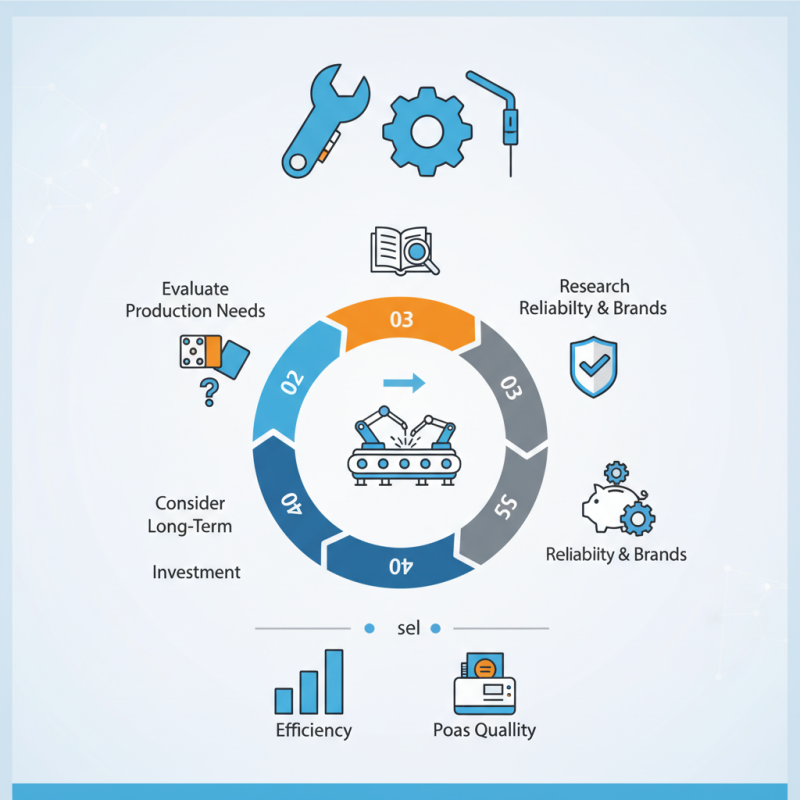
Choosing the right welding equipment for mass production lines can be challenging. A well-informed decision can significantly enhance efficiency and product quality. How to choose welding equipment for mass production lines involves several crucial factors.

Evaluate your specific production needs before making any decisions. Consider the materials you are working with and the types of welds required. Different projects demand different equipment and techniques. It’s important to consult with experts in the field for insights and recommendations.

Reliability plays a critical role in mass production. Equipment downtime can lead to substantial losses. Research brands known for quality and durability. Brand reputation is often a good indicator of long-term performance. Remember that investing in the right welding tools is not just about immediate costs; it’s also about future savings and productivity. Take time to reflect on your choices, as the right equipment can shape your production line's success.
2026 Best Tips for Choosing Welding Equipment for Mass Production?

Choosing the Right Welding Process for Mass Production Efficiency

Choosing the right welding process is crucial for enhancing mass production efficiency. Factors like speed, quality, and cost-effectiveness should be considered. According to the American Welding Society, over 50% of all manufacturing processes in the U.S. involve welding. This illustrates the prominent role welding plays in modern industries.

Tips to choose the right welding process include assessing the materials involved. Metals like aluminum or stainless steel may require different techniques. Arc welding is often preferred for steel, while MIG welding is common for aluminum. Understanding the specifics of your materials can lead to increased productivity.

Another important factor is automation. Embracing robotic welding can drastically boost output. In fact, industry reports highlight that automated welding can improve production rates by up to 30%. However, upfront costs for automation might deter some manufacturers. Reflecting on such investments is essential for long-term success. Evaluating the return on investment is crucial, as the efficiency gained can offset initial expenditures.

Welding Process Efficiency for Mass Production

Evaluating Welding Equipment Specifications for High-Volume Manufacturing

When evaluating welding equipment for high-volume manufacturing, several key specifications come into play. Understanding these specifications will help ensure efficient operations. Pay attention to power output. Higher power ratings typically improve welding speed and penetration. However, this could lead to increased operational costs. Balance is essential.

Another critical factor is the duty cycle. It indicates how long the equipment can run without overheating. For mass production, a higher duty cycle is advantageous. Yet, equipment with high duty cycles can also demand more maintenance and monitoring. Consider the potential downtime and repair costs in your evaluation.

Lastly, look at the ease of use and automation features. Advanced controls can significantly reduce skill requirements and training time. However, integrating automation might complicate repairs and increase initial investment. It’s crucial to weigh these trade-offs. Evaluate how well the equipment adapts to your specific production demands, as flexibility in equipment can lead to better outcomes.

2026 Best Tips for Choosing Welding Equipment for Mass Production

Specification Importance Level Recommended Value Notes
Welding Speed High ≥ 5 m/min Fast production rates are critical for mass manufacturing.
Power Consumption Medium ≤ 100 kW Efficient energy use reduces overall costs.
Portability Low Stationary preferred Stationary equipment is better for mass production.
Durability High ≥ 5000 cycles Long-lasting equipment minimizes downtime.
Control Precision High ± 0.1 mm Precision controls improve weld quality.

Understanding the Role of Automation in Modern Welding Practices

In modern welding practices, automation significantly transforms mass production. According to a report by the American Welding Society, over 60% of companies now use automated welding processes. This transition enhances efficiency and reduces labor costs. Automation minimizes human error, thereby improving product quality. With robots performing repetitive tasks, welders can focus on more complex operations.

When selecting welding equipment, consider automation capabilities. Look for machines that integrate seamlessly with existing systems. Understanding the software and controls is essential. A significant investment today may yield better results tomorrow.

Keep in mind that not all applications are suitable for automation. In some cases, manual welding may still offer better precision. Evaluate your production needs carefully. Balance between automated and manual work can lead to optimal outcomes. Flexibility in your approach often leads to innovative solutions.

Cost Analysis: Balancing Quality and Price in Welding Equipment Selection

When selecting welding equipment for mass production, balancing quality and price is crucial. High-quality equipment often ensures longer service life and better performance. However, the initial investment can be significantly higher. It's essential to analyze the long-term benefits and potential savings. Investing in durable equipment may seem costly upfront, but it can reduce maintenance and replacement expenses over time.

Consider the specific needs of your production line. Not all projects require the most advanced technology. Sometimes, mid-range options can deliver satisfactory results without breaking the bank. Assessing your production volume and complexity can lead to more tailored recommendations. A balance of efficiency and control is vital to optimize both output and costs.

Gather insights from industry experts and peers. Their hands-on experience can uncover pitfalls you might overlook. Quality versus price is not always a clear-cut decision. Reflect on past projects to identify what worked and what didn't. Learning from these experiences can lead to a more informed and effective purchasing decision.

Safety Standards and Regulations Impacting Welding Equipment Choices

When selecting welding equipment for mass production, understanding safety standards is vital. OSHA and ANSI provide guidelines that shape equipment choices in the industry. Over 9,000 injuries related to welding occur annually in the U.S. This statistic highlights the importance of adhering to safety protocols.

Welding equipment must comply with specific regulations. For instance, personal protective equipment (PPE) standards are outlined in OSHA regulations. Quality arc helmets and flame-resistant clothing are essential. These measures reduce risks of burns and respiratory issues from fumes.

Ignoring safety standards can lead to costly consequences. Compliance not only protects workers but can also enhance productivity. Some companies report a 30% reduction in workplace accidents after implementing stringent safety protocols. Investing in quality equipment and training promotes a safer work environment. Each choice impacts overall efficiency and employee well-being, making proper understanding of safety regulations essential.

FAQS

: What factors should I consider when choosing a welding process?

: Consider speed, quality, and cost-effectiveness. Assess the materials, as different metals require different techniques.

How does automation affect welding efficiency?

Automation can boost output by up to 30%. However, initial costs may be higher, requiring careful reflection on investment.

Why is power output important in welding equipment?

Higher power ratings improve welding speed and penetration but may increase operational costs. Balance is key.

What is a duty cycle in welding equipment?

The duty cycle indicates how long equipment can run without overheating. A higher duty cycle is better for mass production.

What safety standards should I know when selecting welding equipment?

OSHA and ANSI provide key safety guidelines. Compliance with PPE standards is vital to protect workers from injuries.

How can non-compliance with safety standards affect a business?

Ignoring safety standards can lead to injuries and costly consequences. It can also harm productivity and worker morale.

What role does equipment ease of use play in production?

Easier-to-use equipment reduces training time. However, it may complicate repairs, so weigh these trade-offs carefully.

What are the risks of automated welding systems?

Automation might increase initial investment and complicate repairs. It’s important to understand potential long-term implications.

How does proper training impact welding safety?

Investing in training promotes a safer work environment. This can reduce workplace accidents significantly over time.

Why is it important to evaluate equipment specs?

Evaluating specifications helps ensure efficiency and productivity. It can also lead to informed decisions regarding maintenance needs.

Conclusion

When considering how to choose welding equipment for mass production lines, it is essential to begin by selecting the right welding process that maximizes efficiency. Understanding the various welding techniques available ensures that the process aligns with specific production needs and output goals. Additionally, evaluating equipment specifications is critical for high-volume manufacturing, as it impacts the overall productivity and quality of the welds.

Automation plays a significant role in modern welding practices, enhancing precision and reducing labor costs. A thorough cost analysis is necessary to strike a balance between quality and price, ensuring that the chosen equipment provides the best return on investment. Furthermore, adhering to safety standards and regulations is crucial, as it influences both equipment selection and workplace safety. By taking these factors into account, manufacturers can optimize their welding processes for mass production successfully.

Sophia

Sophia

Sophia is a dedicated marketing professional with an exceptional depth of knowledge about her company's products and services. With a keen understanding of market trends and customer needs, she crafts insightful blog posts that not only inform but also engage readers, enriching the company’s online......