What Is Safe Training for Automatic Welding Machines?

Time:2026-10-17 Author:Madeline
0%

Safe training for automatic welding machines begins with a clear understanding of real workplace hazards. OSHA reports that more than 500,000 workers perform welding, brazing, and cutting operations in the United States. Its guidance identifies fumes, radiation, burns, electric shock, noise, and fire as significant risks. Automatic equipment reduces some manual exposure, but it introduces new dangers. Unexpected starts, robot movement, pinch points, and poorly controlled energy can injure workers within seconds.

The National Institute for Occupational Safety and Health emphasizes engineering controls, ventilation, exposure assessment, and worker education in its welding safety recommendations. OSHA’s machine guarding and control-of-hazardous-energy requirements also support practical training programs. Workers should learn to inspect curtains, extraction arms, interlocks, emergency stops, fixtures, and cable connections before production begins. A trainer should demonstrate the correct response when a torch misaligns or a workpiece shifts. Hands must never enter a guarded cell during automatic operation.

How to train workers to operate automatic welding machines safely requires more than a short video or signed checklist. Effective instruction combines classroom knowledge, supervised practice, equipment-specific drills, and documented competency checks. The American Welding Society’s safety resources reinforce the value of hazard awareness and disciplined work practices. Still, no training plan is flawless. Machines change, production pressure rises, and experienced operators may become careless. That weakness deserves attention. Supervisors should observe actual work, refresh training after changes or near misses, and invite workers to report confusing controls without fear. Safe performance is built through repetition, verification, and honest review.
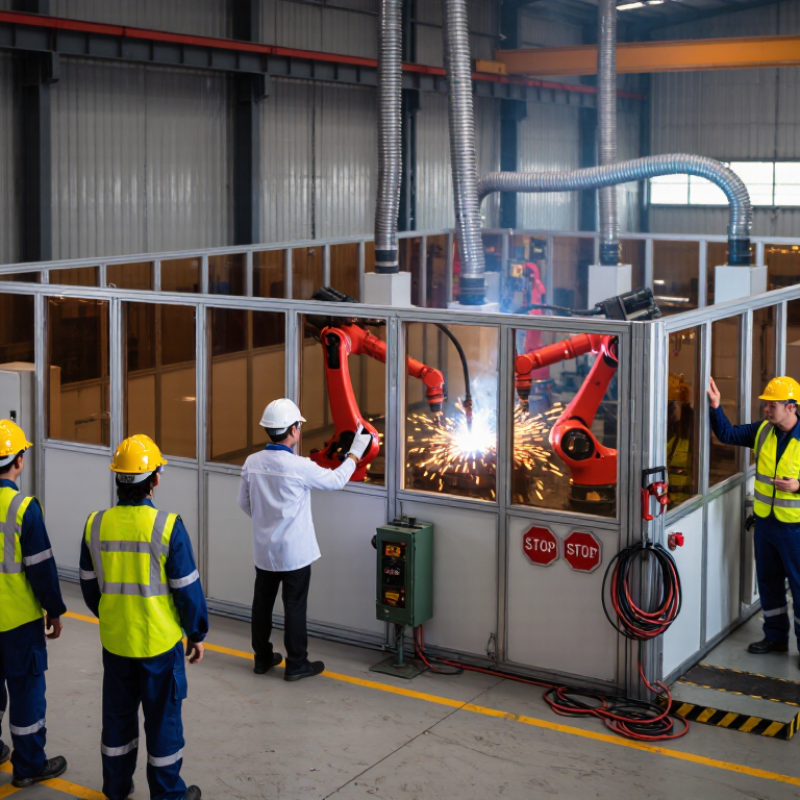
What Is Safe Training for Automatic Welding Machines?

Map Automatic Welding Hazards Using OSHA 1910.252 and ANSI Z49.1

Safe training for automatic welding machines starts with a hazard map, not a lecture.

OSHA 1910.252 requires controls for fire, ventilation, radiation, compressed gases, and nearby combustibles. ANSI Z49.1 adds practical guidance for electrical safety, protective clothing, fumes, confined spaces, and operator responsibilities.

Mark each hazard beside the machine: arc flash at the cell opening, pinch points near fixtures, hot parts on the outfeed table, and fumes around the extraction hood.

OSHA reports that welding, cutting, and brazing hazards affect more than 500,000 workers in the United States each year.

That figure makes ventilation verification essential. Measure airflow at the hood, inspect filters, and confirm that fumes do not enter the operator’s breathing zone.

A visible plume means something is wrong.

Not always, but often.

ANSI Z49.1 also supports suitable helmets, gloves, flame-resistant clothing, hearing protection, and task-specific respiratory controls. PPE cannot repair poor ventilation.

Training should include normal operation, teaching mode, emergency stops, guard interlocks, and safe recovery after a jam.

OSHA’s 1910.252 hot-work rules require fire prevention planning, including removing combustibles and assigning fire-watch duties when conditions demand them.

A written checklist may still miss stored energy inside a fixture or unexpected robot movement. Review it with maintenance staff and operators beside the equipment.

Then challenge one assumption:

can a worker explain the hazard, control, and failure response without prompting?

If not, the training is unfinished.

Verify Guards and Interlocks Against ISO 10218-2 Requirements

Safe training for automatic welding machines begins with more than operating instructions. It depends on verified protection around the complete work cell. Under ISO 10218-2, integrators should assess access points, protective guards, interlocking devices, and safety-related control functions. Training should show operators why each barrier exists, not merely where to stand.

A practical session can begin at the loading door. The trainer opens it, confirms that hazardous motion stops, and checks whether restarting requires a deliberate reset outside the danger zone. The same test applies to side panels, service gates, and inspection openings.

Do not assume a closed guard provides protection. Inspect hinges, latches, switches, wiring, and visible damage. Small gaps can matter.

Test every access route.

Verification should follow documented risk assessment and the applicable edition of ISO 10218-2. It should also consider welding fumes, hot components, stored energy, and unexpected robot movement. A qualified person should record test conditions, results, corrective actions, and authorization for return to service. Functional checks are essential, but they are not the entire validation process.

A checklist may look complete while missing a rarely used panel. That is an uncomfortable weakness. Reviewers should challenge normal assumptions, especially after software changes, maintenance, or cell modifications. Operators need clear training on reset locations, abnormal conditions, and when to stop work. Guards and interlocks are not teaching aids; they are safety functions requiring disciplined verification.

Teach Lockout/Tagout Through OSHA 1910.147’s Six-Step Sequence

What Is Safe Training for Automatic Welding Machines?

Teach Lockout/Tagout Through OSHA 1910.147’s Six-Step Sequence

Safe training begins at the machine, not in a classroom alone. Automatic welding equipment may contain electrical, pneumatic, hydraulic, thermal, and mechanical energy. A qualified trainer should identify each source before teaching the six-step sequence under OSHA 1910.147.

  1. Step one is preparation. Review the machine’s energy-control procedure and inspect the isolation points.
  2. Step two is shutdown. Stop the equipment using its normal controls.
  3. Step three is isolation. Open disconnects, close valves, and block moving parts.
  4. Step four is lockout or tagout. Each authorized employee applies a personal lock and identification tag.
  5. Step five controls stored energy. Bleed air, discharge capacitors, lower assemblies, and wait for hot surfaces to cool.
  6. Step six is verification. Try the controls, test for zero energy, and return controls to neutral.

The verification step deserves extra attention. A silent robot does not prove isolation. A meter reading, pressure gauge, and physical restraint may all be necessary. Keep people outside the guarded area during testing.

Good training uses a realistic simulation, with an instructor observing every action. The learner should explain what could go wrong, not merely repeat instructions.

Small mistakes reveal weak procedures. A missing lock point may be discovered late. That is uncomfortable, but useful. Stop the exercise, correct the procedure, and document the change. Before re-energizing, inspect the area, remove tools, confirm personnel are clear, and notify affected employees. Safety depends on disciplined steps, even when production pressure feels urgent.

Measure Fumes and Noise Against OSHA PELs and the 90 dBA Limit

Safe Training for Automatic Welding Machines

Training should treat fumes and noise as measurable hazards, not background conditions. Welding fumes vary with the metal, coating, wire, shielding gas, and ventilation system. A machine operator may feel comfortable while exposure remains excessive.

Use personal air sampling when possible. Compare results with the OSHA permissible exposure limit for each identified contaminant. These limits are substance-specific, so one general “welding fume” number is not enough. Review the safety data sheets, inspect extraction points, and confirm that local ventilation captures fumes near the arc. Respiratory protection may be necessary, but it should not replace effective engineering controls. Keep sampling records with the machine’s operating conditions.

Noise requires equal attention. Measure the operator’s daily exposure with a calibrated dosimeter, especially near arc starts, wire feeders, compressors, and metal impact points. OSHA’s general industry limit is 90 dBA for an eight-hour time-weighted average, with a 5 dB exchange rate. Short tasks can still raise the daily dose quickly. Post readings where operators can see them. Provide hearing protection when required, and train workers to fit it correctly.

Small details matter.

A quiet test run may not represent production. That is an easy mistake. Recheck levels after changing speed, fixtures, materials, or ventilation settings. Training should include what the numbers mean, how to report symptoms, and when to stop and request another assessment. A checklist helps, but it can miss changing conditions. Human judgment still matters.

Assess Operator Competence with Practical Drills and Documented Retraining

What Is Safe Training for Automatic Welding Machines?

Safe training begins with proof, not attendance. OSHA estimates that about 500,000 workers perform welding, cutting, or brazing in the United States. Each operator should complete practical drills before running production equipment.

A useful drill starts with a cold machine. The operator identifies the emergency stop, guarding, interlocks, fume controls, and restricted zones. Then comes a controlled weld cycle using approved materials. The trainer checks setup accuracy, torch alignment, fixture security, alarm response, and safe shutdown. Keep it observable.

Document the details.

Record the operator’s name, machine configuration, drill results, coaching notes, and authorization date. The record should also show failed tasks and corrective actions. A perfect score can hide weak judgment. I have seen operators follow normal cycles well, then hesitate when a sensor fault appears. That hesitation needs practice, not blame.

The National Institute for Occupational Safety and Health identifies welding fumes as a serious exposure concern, so drills must include ventilation checks and respiratory-control procedures. OSHA guidance also emphasizes electrical safety, fire prevention, and protective equipment. Retraining should follow equipment changes, repeated errors, near misses, or long periods away from the machine. A short quarterly drill may reveal more than a yearly signature. However, some programs measure paperwork more carefully than competence. That deserves honest review.

What Is Safe Training for Automatic Welding Machines? — Operator Competence, Practical Drills and Documented Retraining
Training Area Practical Drill or Assessment Minimum Competence Standard Evidence to Record Recommended Retraining Trigger Status
Machine Orientation and Safe Operating Limits Identify the main controls, guarded zones, emergency stops, isolation points and operating limits before starting a supervised cycle. Correctly identifies all critical controls and explains the purpose of each safeguard without prompting. Orientation checklist, trainer initials, date and machine-specific safety acknowledgement. Any machine modification, control-system change or documented uncertainty during operation. Required
Hazard Recognition Review a simulated work area containing examples of arc flash exposure, hot surfaces, welding fumes, pinch points, stored energy and trip hazards. Identifies each relevant hazard and selects an appropriate control, such as guarding, ventilation, exclusion zones or isolation. Hazard-identification score, corrective-action notes and assessor signature. New process hazards, repeated unsafe observations or an incident or near miss. Required
Personal Protective Equipment Inspect, select and correctly wear task-appropriate eye, face, hand, body and hearing protection; demonstrate pre-use inspection. Uses suitable PPE correctly, checks condition and explains its limitations and replacement requirements. PPE demonstration record and inspection checklist. Changes in materials, welding parameters, exposure assessment or PPE requirements. Required
Pre-Start Inspection Complete a documented inspection of guarding, interlocks, fixtures, cables, gas connections, extraction, work area and emergency-stop function under supervision. Completes every critical check and stops the task when a safety-critical defect is found. Signed pre-start form, defect report and release-to-operate approval. Before each shift or production start, and after maintenance or abnormal equipment behavior. Required
Safe Loading and Unloading Load and remove workpieces using the approved fixture, handling method and exclusion-zone procedure without entering a hazardous cycle area. Maintains safe hand placement, verifies secure workholding and follows the defined loading sequence every time. Observed drill checklist and operator authorization record. Fixture change, workpiece change, repeated loading errors or an unsafe bypass attempt. Competence Check
Programming and Parameter Control Retrieve an approved program, verify job number and essential parameters, and explain why unauthorized edits are prohibited. Uses only approved programs and confirms critical settings against the job documentation before cycling. Program-verification checklist, revision number and trainer approval. Program revision, process change, quality deviation or unauthorized parameter adjustment. Role-Dependent
Start-Up and Test Cycle Perform a controlled dry run or first-piece cycle with the work area clear, guards active and the operator positioned outside the hazard zone. Confirms readiness before start, observes the cycle from a safe position and stops the machine when conditions differ from expectations. First-cycle checklist, observation notes and first-piece approval. New program, new fixture, unusual noise or movement, or any unexpected cycle behavior. Required
Emergency Stop and Abnormal Condition Response Use a controlled simulation to demonstrate emergency-stop activation, personnel notification, area control and escalation without attempting an unsafe restart. Stops the process promptly, keeps clear of hazards, reports the condition and follows the restart authorization process. Emergency-response drill record, response time observation and corrective actions. Emergency event, near miss, failed drill or uncertainty about isolation and restart steps. Required
Isolation and Lockout/Tagout Awareness Explain and, where authorized, demonstrate the site-approved isolation procedure for electrical, pneumatic, hydraulic, thermal and stored mechanical energy. Does not rely on the emergency stop as isolation and understands who may apply, verify and remove personal locks. Authorized-person training record, isolation checklist and practical observation. Equipment modification, maintenance role change or any lockout/verification failure. Authorized Roles
Welding Fume and Ventilation Controls Verify local exhaust or other required controls before welding and identify actions to take if extraction is ineffective. Confirms ventilation is operating, keeps the capture point correctly positioned and stops work when controls fail. Ventilation pre-use check and supervisor observation. Ventilation failure, material or consumable change, process change or exposure concern. Required
Quality and Safety Interlock Inspect a sample weld or automated cycle output and demonstrate that production quality concerns are escalated rather than corrected by bypassing safeguards. Separates quality troubleshooting from safety-control bypasses and places nonconforming work in the designated hold process. Sample inspection record, nonconformance report and coaching notes. Repeated defects, pressure to bypass controls or changes to inspection requirements. Competence Check
Final Competency Assessment Complete a supervised end-to-end task: pre-start inspection, loading, approved program verification, test cycle, monitoring, stop response and closeout. Performs all critical steps consistently, communicates hazards clearly and requires no unsafe prompting from the assessor. Competency assessment form, assessor name, date, scope of authorization and expiry or review date. Periodic review, extended absence, incident, failed observation or significant process change. Authorized When Passed
Documented Retraining and Follow-Up Repeat only the failed or affected drills, then complete a supervised reassessment before returning to independent operation. Demonstrates corrected behavior and achieves a documented pass against the same critical criteria. Retraining reason, learning objectives, drill results, assessor signature and authorization decision. Failed assessment, unsafe act, near miss, incident, long absence or observed decline in competence. Required When Triggered
Assessment note: Independent operation should be permitted only after the operator has completed the applicable training, demonstrated competence in practical drills and received documented authorization for the specific machine and task.

FAQS

What hazards should a map show around an automatic welding machine?

Mark arc-flash areas, pinch points, hot surfaces, moving parts, fumes, and restricted zones. Use clear labels beside the machine. Do not rely on memory alone.

How can operators verify that fume extraction works?

Measure airflow at the extraction hood before production begins. Inspect filters and watch the operator’s breathing zone. A visible plume often signals poor control.

Can personal protective equipment replace effective ventilation?

No. Helmets, gloves, flame-resistant clothing, and hearing protection reduce some risks. They cannot correct weak extraction or contaminated air. That distinction is easy to forget.

What should practical training include?

Training should cover normal operation, teaching mode, emergency stops, guards, interlocks, and jam recovery. Operators should practice with a cold machine. Then use approved materials during a controlled weld cycle.

How can a trainer assess operator competence?

Ask the operator to identify controls, restricted areas, fume systems, and emergency stops. Observe setup, torch alignment, fixture security, alarm response, and shutdown. Attendance is not proof. Performance is stronger evidence.

What fire precautions are needed near welding equipment?

Remove nearby combustibles before hot work begins. Check floors, storage areas, curtains, and surrounding equipment. Assign a fire watch when conditions require one. Small gaps can matter.

What details should training records contain?

Record the operator, machine setup, drill results, coaching notes, failed tasks, corrective actions, and authorization date. A perfect score may hide weak judgment. Review the evidence honestly.

When should operators receive retraining?

Retraining should follow equipment changes, repeated errors, near misses, or long absences. Short periodic drills can expose hesitation better than yearly signatures. The program may still miss something.

Conclusion

Safe training for automatic welding machines begins with a structured review of workplace hazards, including arc radiation, hot metal, moving equipment, electrical energy, fumes, and excessive noise. A practical program should use recognized safety principles to identify risks, verify that guards, barriers, emergency stops, and interlocks function correctly, and confirm that operators understand restricted areas. Training must also explain lockout/tagout through a clear six-step sequence: preparation, shutdown, isolation, application of locks and tags, verification, and restoration.

How to train workers to operate automatic welding machines safely also requires measuring airborne contaminants and noise, comparing results with applicable exposure limits, and improving ventilation or hearing protection when necessary. Finally, employers should assess competence through hands-on drills covering startup, normal operation, alarm response, safe shutdown, and emergency procedures. Written records, regular observation, and documented retraining help ensure that skills remain current whenever equipment, processes, or workplace conditions change.

Madeline

Madeline

Madeline is a dedicated marketing professional with a wealth of expertise in our company's core offerings. With a keen understanding of the industry, she brings a unique perspective to her role, consistently delivering high-quality content that highlights the superior aspects of our products. As......