Ultrasonic welding plays a vital role in industrial bonding applications. It combines high-frequency vibrations with pressure to create strong joints between materials. Dr. Emily Carter, an expert in welding technologies, states, "Ultrasonic welding ensures reliable and consistent bonding through its advanced mechanisms." This technological process leads to superior results, but challenges persist.
How does ultrasonic welding achieve stable bonding effect? The process involves precise control of parameters like amplitude, pressure, and duration. Each of these factors significantly influences the quality of the bond. However, achieving the perfect balance can be tough. Sometimes, overlooking one parameter can lead to weak joints.
While ultrasonic welding offers advantages, it demands a deep understanding of materials and equipment. Manufacturers must stay informed about advancements. Continuous training and adaptation are essential for optimal outcomes. The challenge lies in maintaining consistent quality across varying production runs.
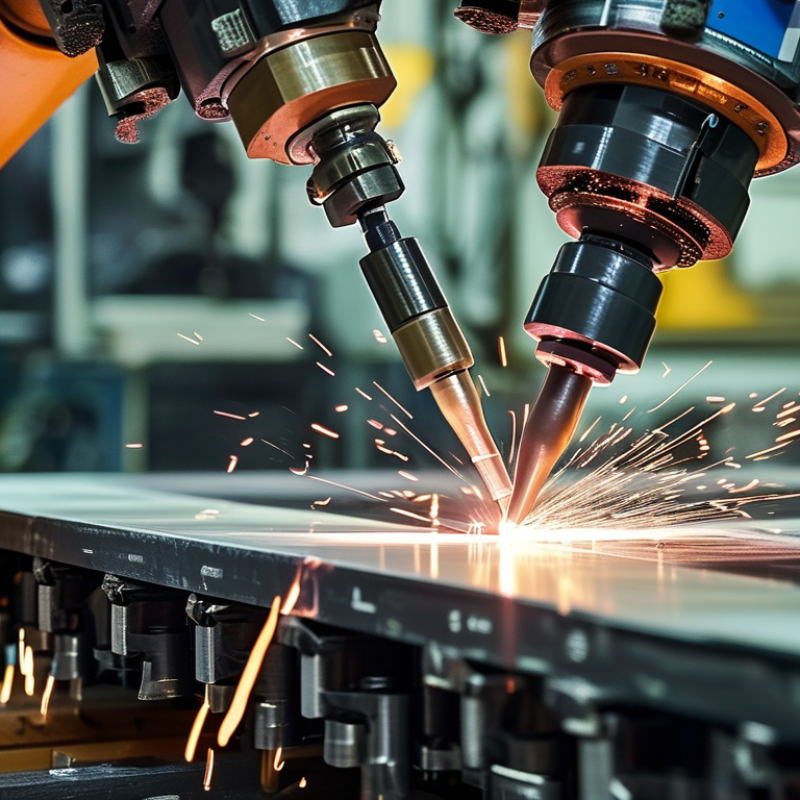
Ultrasonic welding technology relies on high-frequency sound waves to create strong bonds between materials. This process starts with the generation of ultrasonic vibrations in a transducer. These vibrations are then amplified and directed into the workpieces. The rapid movement creates localized heat due to friction, resulting in softening the materials at their contact points.
The principle is relatively straightforward but effective. The joining surfaces must be clean and free from contaminants to maximize bonding strength. Different materials can be welded together, but results may vary. For instance, the type of plastic or metal chosen can influence heat generation and bonding quality. Adjusting parameters such as pressure and amplitude is crucial. Engineers often experiment to find the best settings for specific applications.
However, challenges do exist. Inconsistent results may arise from operator technique or equipment calibration. Misalignment during the process can lead to weaker joints. Understanding these nuances is essential for achieving optimal results. Continuous improvement and learning from mistakes play a vital role in mastering ultrasonic welding technology. This ongoing process helps industries enhance production efficiency while ensuring bond reliability.
| Parameter | Description | Impact on Bonding |
|---|---|---|
| Frequency | The number of cycles per second in the ultrasonic wave. | Higher frequencies lead to smaller effective welding spots and more controlled energy distribution. |
| Amplitude | The maximum displacement of the ultrasonic wave. | Increased amplitude improves the energy input, enhancing bond strength. |
| Pressure | The force applied to the materials during welding. | Optimized pressure ensures effective contact and fusion of the materials. |
| Time | The duration of the ultrasonic wave application. | Appropriate time ensures complete melting and adequate bond formation. |
| Material Type | The materials being welded together. | Compatibility of materials influences the quality and stability of the bond. |
: Ultrasonic welding is a process that joins materials using high-frequency ultrasonic waves.
Ultrasonic waves create rapid vibrations that generate localized heating at material interfaces.
Pressure helps the surfaces flow and fuse, creating a strong bond between the materials.
Material selection, surface cleanliness, and weld parameters significantly affect bond quality.
Conduct preliminary tests, monitor temperatures, and keep processes consistent for better results.
Weak bonds may form if amplitude, pressure, and other parameters are not properly controlled.
Contaminants can weaken the bond, so effective cleaning is essential before welding.
Yes, occasional variability can arise, requiring continuous monitoring and adjustments.
Materials vary in response to ultrasonic energy; thermoplastics generally bond better than metals.
Yes, perfecting ultrasonic welding requires practice, experience, and time to address imperfections.
Ultrasonic welding is a cutting-edge technology that effectively achieves stable bonding results through its unique principles and mechanisms. Utilizing high-frequency ultrasonic vibrations, this method generates localized heat at the interface of the materials being joined, leading to fusion and solid-state bonding. Understanding how does ultrasonic welding achieve stable bonding effect involves examining the intricacies of bond formation, where factors such as pressure, energy input, and material properties play critical roles in ensuring a robust connection.
The applications of ultrasonic welding span various industries, from automotive to electronics, showcasing its versatility and reliability. The benefits of this technique lie not only in the consistent quality of bonds produced but also in its efficiency and eco-friendliness. By addressing the factors influencing bond stability, ultrasonic welding emerges as a leading solution for manufacturers seeking reliable and effective bonding methods in their production processes.

 Heping Mechanical