In today's manufacturing landscape, the choice between vibration welding and hot plate welding is critical. These two methods serve as essential techniques in plastic joining processes. According to a report by MarketsandMarkets, the global market for welding is expected to reach $20 billion by 2025, illustrating significant advances and innovations in adhesion technologies.
What is the difference between vibration welding and hot plate welding? Vibration welding utilizes high-frequency mechanical vibrations to generate heat through friction. This method is known for its speed and efficiency, allowing for fast production cycles. In contrast, hot plate welding relies on a heated plate to melt the thermoplastic materials before they are pressed together. This technique is often preferred for larger parts or applications demanding stronger welds.
Each method has its pros and cons. Vibration welding requires less energy, but it may struggle with materials of differing thicknesses. Hot plate welding, while effective for complex geometries, demands longer cycle times. Evaluating specific project needs helps manufacturers make informed choices. Ultimately, understanding these distinctions can lead to improved productivity and manufacturing outcomes.
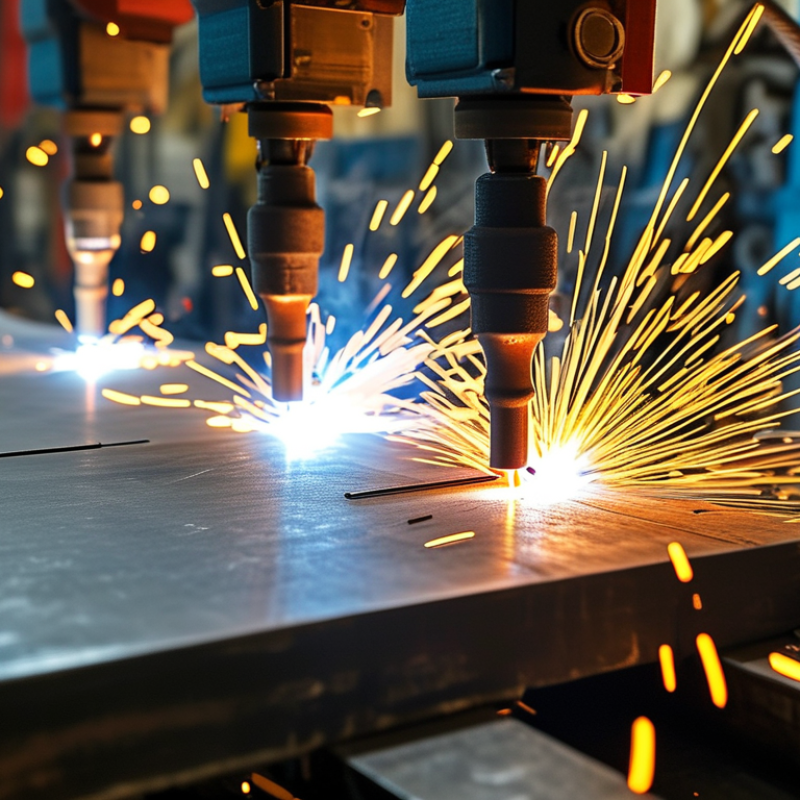
Factors to Consider When Choosing Welding Methods
When selecting between
vibration welding
and
hot plate welding, key factors come into play.
The material type is crucial. For instance, vibration welding excels with thermoplastics.
It creates strong bonds through high-frequency vibrations. In contrast, hot plate welding is preferred
for thicker materials, where heat applied to the surfaces is more effective.
Data from the latest industry report indicates that vibration welding can achieve a strength
of up to 90% of the base material's strength.
Another factor is the required cycle time. Vibration welding typically offers faster cycle times,
sometimes reducing the process by 30%. This can enhance productivity significantly.
However, hot plate welding may have longer setup times due to the need for heating plates.
Companies must analyze their production needs carefully. Depending on part geometry and size,
the ideal method may vary, which can lead to inefficiencies if not thoughtfully considered.
Cost implications also play a significant role. Vibration welding equipment tends to have a lower
initial cost. However, maintenance over time can add to expenses. Hot plate welding equipment, while
more expensive upfront, may incur lower operational costs if managed well. Reflecting on these
aspects is vital for informed decision-making. Ultimately, each method has trade-offs
that warrant careful evaluation against specific project requirements.
Overview of Vibration Welding Technology and Applications
Vibration welding is a widely used technique for joining thermoplastic materials. It employs high-frequency vibrations to create heat through friction. This method can produce strong, high-quality joints in a matter of seconds. According to industry reports, vibration welding technology can enhance production rates by up to 50% compared to traditional methods. This efficiency is crucial in sectors like automotive and consumer electronics, where time-to-market is vital.
Applications of vibration welding are diverse. It's commonly used for assembling parts in automotive interiors, such as dashboards and door panels. The automotive industry accounts for over 30% of vibration welding applications, reflecting the method's strength and reliability. Another significant area is the manufacturing of medical devices, where precise and hygienic welds are necessary. The technology ensures joint integrity, essential for compliance with stringent industry standards.
Despite its advantages, vibration welding isn't without challenges. Material selection is critical; certain thermoplastics may not perform well. Additionally, setup time may be longer for complex assemblies. Companies must weigh these factors when deciding on welding techniques. Engaging in thorough testing can help companies realize the full potential and limitations of vibration welding in their applications.
How to Choose Between Vibration Welding and Hot Plate Welding?
| Criteria |
Vibration Welding |
Hot Plate Welding |
| Process Principle |
Uses high-frequency vibrations to generate heat through friction. |
Uses heated plates to melt the surfaces of the parts to be joined. |
| Materials |
Suitable for thermoplastics and some elastomers. |
Best for thermoplastics with good thermal conductivity. |
| Speed |
Fast process with shorter cycle times. |
Longer process due to heating and cooling times. |
| Quality of Joint |
Strong joint with low risk of contamination. |
Good joint quality; risk of surface contamination. |
| Setup and Equipment |
Requires specialized vibration welding machines. |
Requires hot plate equipment, which may be more versatile. |
| Cost |
Typically lower initial investment, depending on application. |
Higher initial investment for equipment, but can be more efficient. |
| Applications |
Used in automotive, electronics, and packaging. |
Common in automotive, aerospace, and consumer goods. |
Overview of Hot Plate Welding Technology and Applications
Hot plate welding is a widely used technology in various industries, particularly for joining thermoplastic components. The process involves heating the surfaces of the materials until they reach the melting point. Once the surfaces are brought together, as they cool, they form a strong bond. This method is particularly effective for large parts and has been shown to provide strong and durable joints. According to recent industry reports, hot plate welding can achieve bond strengths exceeding 7000 psi, making it suitable for demanding applications in automotive manufacturing and consumer electronics.
One major advantage of hot plate welding is its versatility. It can be used on a range of materials, including polycarbonate, polypropylene, and ABS. This adaptability allows manufacturers to streamline production processes. However, practitioners must consider potential drawbacks. Heat distribution issues can lead to inconsistent weld quality if not properly managed. Moreover, setup costs for specialized equipment can be high, which may deter small manufacturers.
In terms of applications, hot plate welding is effective for producing components like housings, automotive parts, and medical devices. Its capability to produce hermetic seals contributes significantly to maintaining product integrity. However, operators need to weigh the benefits against potential inefficiencies during shorter production runs. This technology requires careful evaluation to ensure it meets specific project demands while balancing costs and output quality.
Comparison of Vibration Welding and Hot Plate Welding Performance
Comparison of Welding Strength and Quality in Both Methods
When comparing vibration welding and hot plate welding, the strength and quality of the weld are crucial factors. Vibration welding excels in producing strong bonds due to its ability to generate high-frequency vibrations. This motion induces frictional heat at the interface of the materials. Consequently, it ensures excellent fusion and minimal thermal degradation, preserving material properties. Users often report impressive results in small to medium-sized parts with complex geometries.
On the other hand, hot plate welding operates by heating a plate that contacts the materials to be joined. This method allows for uniform heat distribution, but it can risk overheating the parts, leading to potential warping. The quality of the weld can vary significantly, influenced by temperature control and the time of exposure. Some users find it challenging to achieve consistent results, especially with diverse materials. Each method has its merits and drawbacks, which often depend on specific project requirements. Careful consideration and experimentation may be necessary to determine the best approach.
Economic Considerations: Cost-Effectiveness of Each Welding Technique
When considering the economic aspects of vibration welding versus hot plate welding, cost-effectiveness emerges as a critical factor. Vibration welding typically has lower operational costs compared to hot plate welding. According to industry reports, vibration welding may reduce energy consumption by up to 30%. This energy efficiency can consequently lead to significant long-term savings. Moreover, vibration welding is often quicker, allowing for increased production rates.
However, it is essential to acknowledge the complexities involved. Hot plate welding can be more suitable for certain materials, despite its higher energy costs. It excels in thicker parts, which can be a limitation for vibration welding. Depending on the material thickness, the initial setup and tooling costs for hot plate welding may also be justified by its specific advantages. Data from manufacturing surveys indicate that companies can achieve better yield rates with hot plate welding under certain conditions, making it worthwhile despite upfront expenses.
Yet, the choice is not always clear-cut. Factors such as required weld strength and material compatibility can complicate decision-making. Each technique carries inherent trade-offs. Investing in the right welding method requires a careful analysis of these parameters. Balancing initial costs against long-term benefits remains essential for manufacturers. This reflection on economic considerations helps guide better decision-making for welding applications.
FAQS
: Vibration welding works best for thermoplastics, creating strong bonds through high-frequency vibrations.
Hot plate welding is more effective for thicker materials, using heat to bond surfaces together.
Vibration welding can reduce cycle times by 30%, boosting productivity in manufacturing processes.
Vibration welding usually has lower initial costs, but ongoing maintenance can escalate expenses over time.
Vibration welding is commonly used for automotive interiors and medical device manufacturing.
Material selection is crucial; some thermoplastics may not bond well, affecting overall effectiveness.
Hot plate welding can work with various materials like polycarbonate and ABS, streamlining production.
Inconsistent heat distribution can lead to poor weld quality if not managed properly.
Hot plate welding can achieve bond strengths over 7000 psi, suitable for demanding applications.
Companies must evaluate production needs, material types, and cost implications to select the ideal welding technique.
Conclusion
When selecting between vibration welding and hot plate welding, several factors should be considered, including application requirements, material compatibility, and production volume. Vibration welding utilizes high-frequency oscillations to create a strong bond between thermoplastic parts, making it suitable for complex shapes and thin materials. In contrast, hot plate welding involves the use of heated plates to join parts, which is ideal for thicker materials and delivering consistent weld quality.
What is the difference between vibration welding and hot plate welding? The primary distinctions lie in their operational mechanisms, welding strength, and quality of the finished joint. Vibration welding typically offers superior strength and speed, while hot plate welding can be more economical for certain applications. Evaluating the cost-effectiveness and specific capabilities of each method will better inform manufacturers about the most suitable technique for their needs.

 Heping Mechanical