When exploring industrial plastic joining methods, professionals often ask, "What is the difference between vibration welding and hot plate welding?" Both techniques serve crucial roles in various manufacturing sectors, particularly in the automotive and consumer goods industries. According to a 2023 report from MarketsandMarkets, the global plastic welding market is projected to grow from $2.1 billion in 2021 to $3.5 billion by 2026, highlighting the increasing importance of efficient joining methods.
Vibration welding utilizes high-frequency vibrations to create heat at the interface of two plastic parts, resulting in a strong bond. In contrast, hot plate welding involves heating a plate between the parts to be joined, then compressing them together. Each method has its advantages and disadvantages. For instance, vibration welding is often faster, while hot plate welding can provide better control over the heat profile. Yet, these methods are not universally applicable; selecting the right technology requires considering material properties and production volume.
As manufacturers strive for efficiency and cost-effectiveness, understanding these differences is critical. The choice can impact product quality and production timelines. Therefore, decision-makers must weigh technical specifications against their production needs. Exploring the nuances of both welding types will enhance informed choices in material joining strategies.
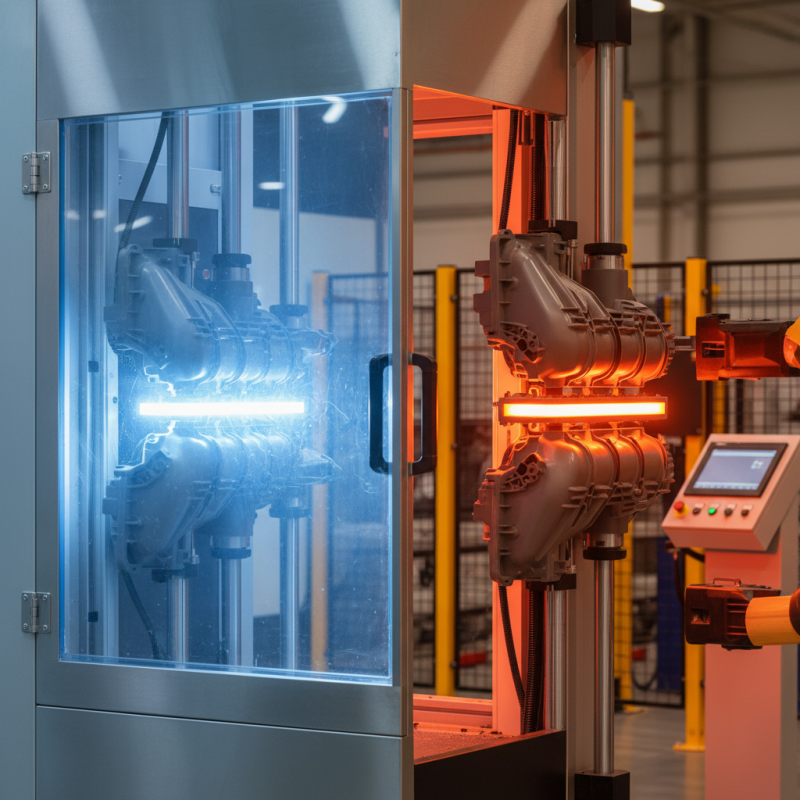
Vibration Welding Overview: Principles and Mechanism of Action
Vibration welding utilizes high-frequency vibrations to generate heat at the interface of two materials. This method relies on mechanical friction, where the parts vibrate against each other. The energy created from this friction melts the surfaces, creating a strong bond once pressure is applied. It is efficient, particularly for thermoplastics, and can achieve quick cycle times, making it suitable for mass production.
The mechanism is straightforward yet effective. The vibrating components create a small amplitude movement, generating enough heat to soften the surfaces. Precise control of vibration frequency and amplitude is vital. However, achieving the optimal settings can be challenging and requires a skilled operator. Factors such as material type and thickness can influence the welding quality, leading to potential inconsistencies in results.
While vibration welding offers significant benefits, it may not be the best option for all applications. Material compatibility and design complexity can pose challenges. In some cases, weld strength may vary, requiring thorough testing. These factors highlight the need for careful examination and adjustment throughout the welding process for the best outcomes.
Hot Plate Welding Overview: Techniques and Applications
Hot plate welding is a widely used technique for joining plastic components. It utilizes a heated plate to melt the surfaces of the parts being joined. Once the materials reach a certain temperature, they are pressed together to create a strong bond. This method is popular in automotive, electronics, and consumer goods industries.
The process begins with precise temperature control. The hot plate must reach the specified temperature before the materials touch. Factors like thickness and material type can affect this timing. Operators need experience to adjust settings effectively. This learning curve can lead to inconsistencies, especially with new staff.
Tips for effective hot plate welding:
- Always calibrate your equipment. Regular checks prevent temperature fluctuations that can weaken bonds.
- Monitor heating time closely. Too long can burn materials; too short can lead to weak joints.
- Practice with different materials. Understanding their properties helps improve weld quality.
In summary, be cautious about layer thickness and surface preparation. Imperfections can occur if surfaces are not clean or aligned. Continuous training can reduce errors. Attention to detail is vital for achieving reliable and robust welds.
Vibration Welding vs Hot Plate Welding: Key Differences
The chart above illustrates the typical applications of Vibration Welding and Hot Plate Welding. Vibration Welding is often used in various manufacturing sectors, showcasing its versatility, while Hot Plate Welding is more specialized, reflected in the lower application score.
Key Performance Metrics: Strength and Durability Comparisons
Vibration welding and hot plate welding are two prominent joining techniques in manufacturing. Each method has distinct advantages when it comes to strength and durability. Understanding these differences is essential for selecting the right technique for specific applications.
Vibration welding involves high-frequency mechanical vibrations, generating heat through friction. This method often results in high bond strength. The joints created are usually robust, making them suitable for demanding applications. However, the process is sensitive to material types and surface conditions. A poor setup could lead to weak joints, necessitating thorough evaluations before implementation.
On the other hand, hot plate welding utilizes a heated surface to soften materials before fusing them together. This technique allows for precise temperature control, contributing to enhanced durability in some cases. Nonetheless, the cooling phase can introduce inconsistencies if not monitored meticulously. Variability in cooling rates can undermine joint integrity, reminding us to consider the environment during manufacturing.
Both methods require careful consideration of their strengths and potential pitfalls. It's important to weigh the specific needs of each application against these performance metrics. Making informed choices can greatly influence the final product's reliability and longevity.
Vibration Welding vs Hot Plate Welding: Key Performance Metrics
| Metric |
Vibration Welding |
Hot Plate Welding |
| Joint Strength (MPa) |
25-30 |
20-25 |
| Cycle Time (Seconds) |
4-10 |
10-30 |
| Material Compatibility |
Widely compatible |
Limited compatibility |
| Energy Consumption (kWh) |
0.05-0.1 |
0.2-0.4 |
| Thermal Deformation Risk |
Low |
Higher |
Cost Analysis: Economic Considerations for Each Welding Method
When comparing vibration welding and hot plate welding, cost analysis plays a crucial role. Both methods have unique economic implications.
Vibration welding is often seen as more cost-effective for high-volume projects. It requires less energy per cycle than hot plate processes, leading to lower operational costs. Industry reports suggest that vibration welding can reduce energy consumption by up to 50% compared to hot plate welding.
Hot plate welding, however, may have advantages in material versatility. Some materials bond more effectively with the hot plate method. This could mean fewer failures, which translates to savings in rework and waste. According to a report by the American Society for Testing and Materials, a 30% reduction in waste can offset higher initial equipment costs over time.
Tip: Consider the production scale before choosing a method. Smaller projects may benefit from hot plate welding despite its costs. For larger volumes, vibration welding is usually more economical.
Tip: Evaluate not just immediate costs, but long-term operational expenses. Equipment maintenance and energy consumption can significantly affect total costs. A comprehensive analysis is vital for an informed decision.
Industry Applications: Common Uses for Vibration vs. Hot Plate Welding
Vibration welding and hot plate welding serve distinct roles in various industries. Vibration welding utilizes high-frequency vibrations to generate heat and bond parts, making it effective for joining thermoplastics. This method is widely used in automotive applications, such as manufacturing dashboard components. The precision and speed make it ideal for high-volume production settings.
On the other hand, hot plate welding employs heated plates to melt the materials at the joint. It's suitable for larger parts and multiple layers. Common in the consumer goods sector, hot plate welding is often used for creating durable containers and appliances. It offers versatility, but it may lack the speed of vibration welding.
Examining specific applications is crucial for making informed decisions. In industries where tight tolerances are essential, vibration welding shines. Yet, its complexity requires skilled operators. Conversely, while hot plate welding has broader adaptability, it's limited by longer cycle times. Balancing these methods based on project requirements is key. Understanding the nuances leads to better outcomes.
Conclusion
Vibration welding and hot plate welding are two distinct thermal joining methods utilized in various industrial applications. Vibration welding operates on the principles of mechanical vibration to generate heat at the interface of the materials being joined, resulting in strong fusion. This technique is particularly suited for large parts and complex geometries. On the other hand, hot plate welding involves heating a plate until it reaches the melting point of the materials, which are then pressed together upon removal of the plate, making it ideal for certain thermoplastics.
What is the difference between vibration welding and hot plate welding lies primarily in their mechanisms and performance metrics. Vibration welding generally offers superior strength and durability in the finished joints while potentially presenting a more cost-effective solution for certain applications. Conversely, hot plate welding tends to be favored in scenarios requiring a more straightforward process. Ultimately, the choice between the two methods often hinges on specific industry applications and economic considerations, including material type and production volume.

 Heping Mechanical