Heping Mechanical
1 / 5
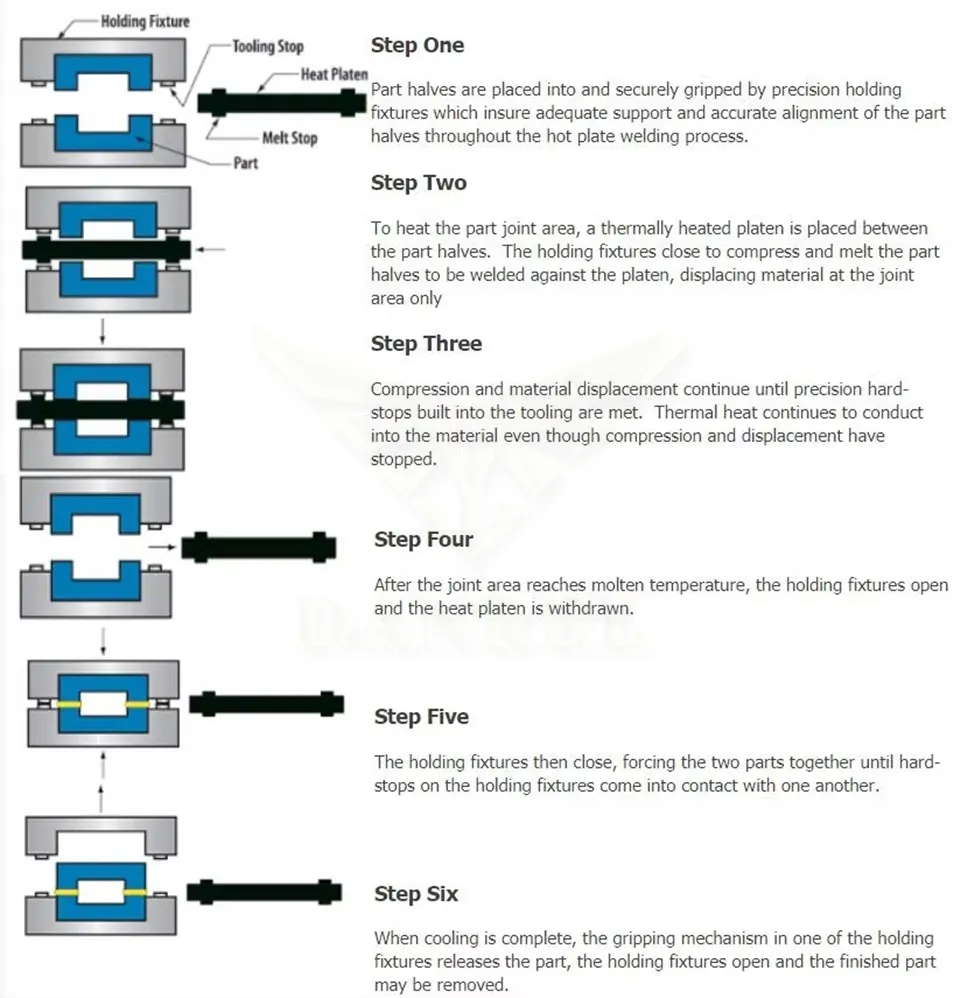
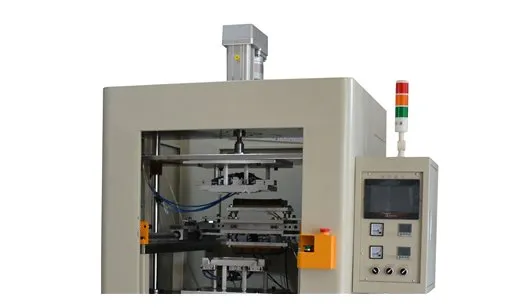
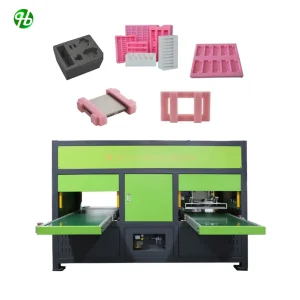
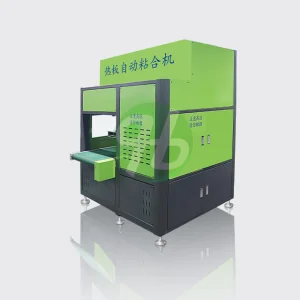
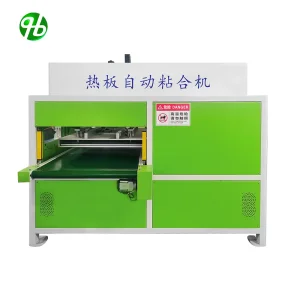
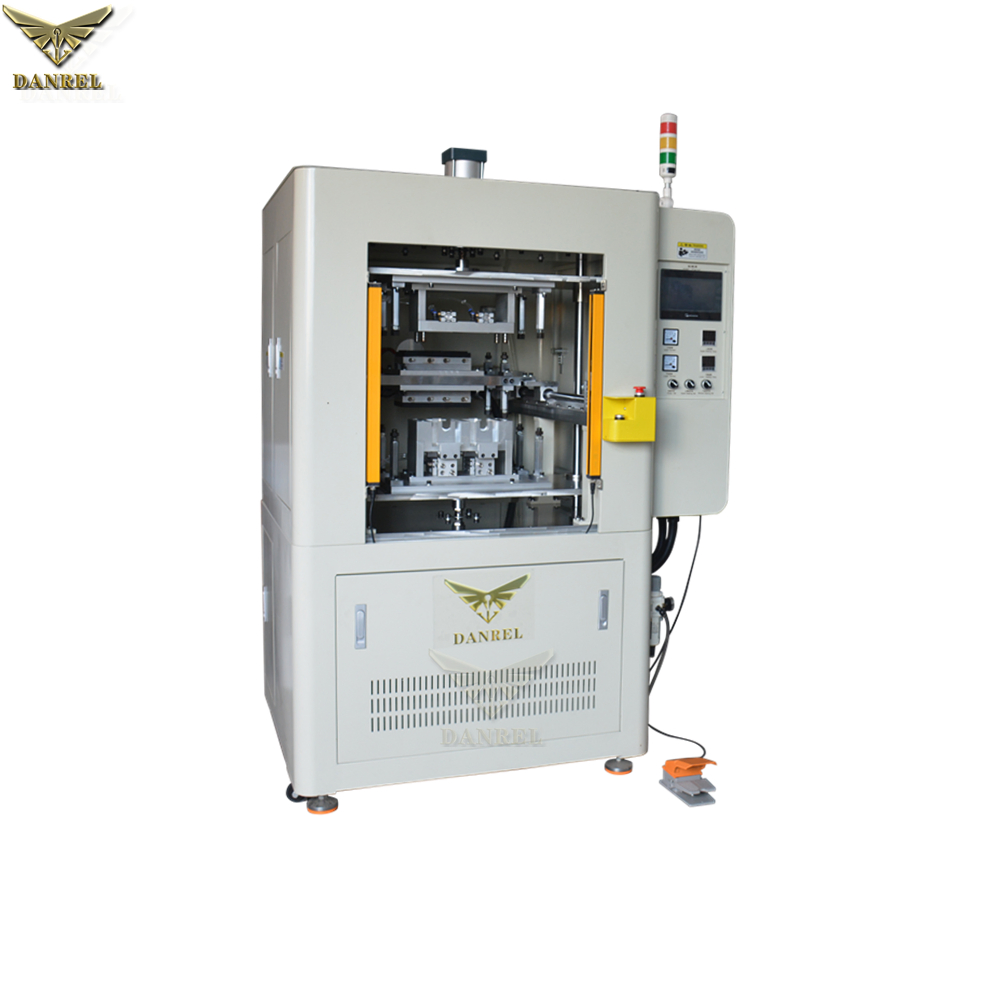
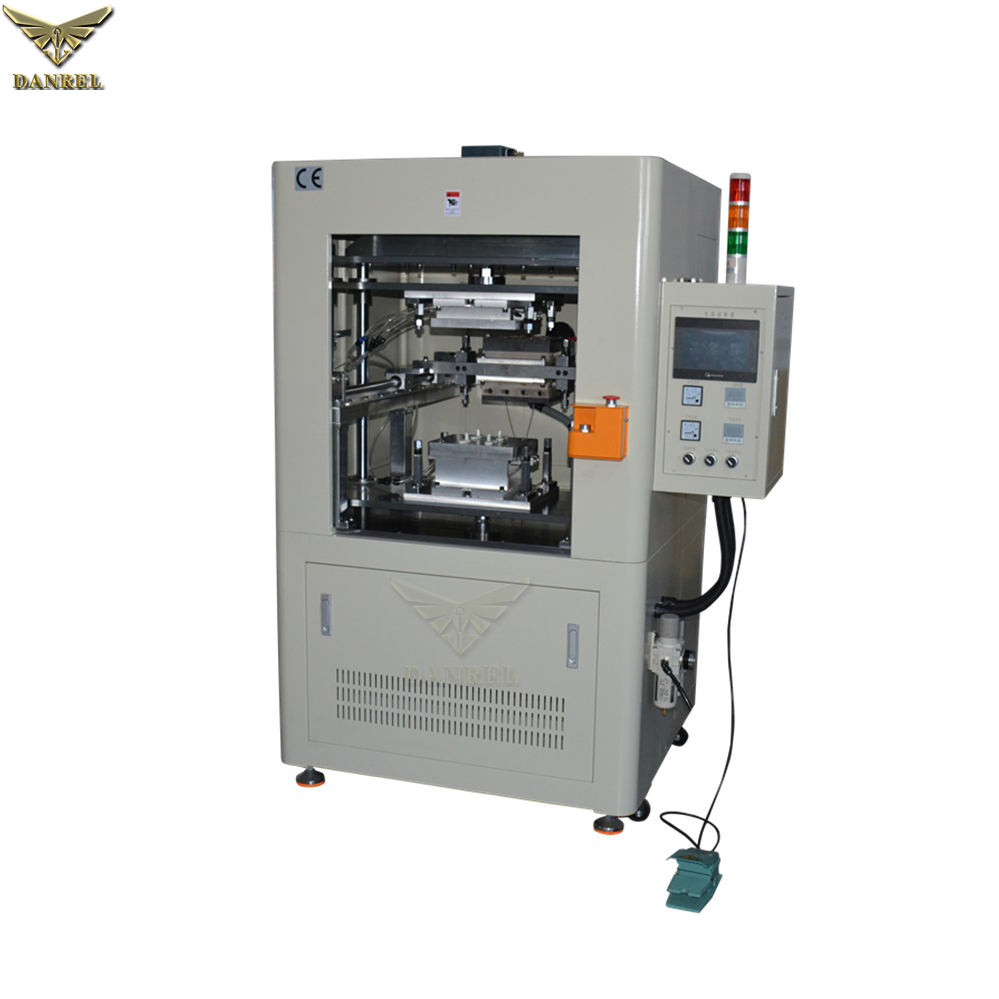
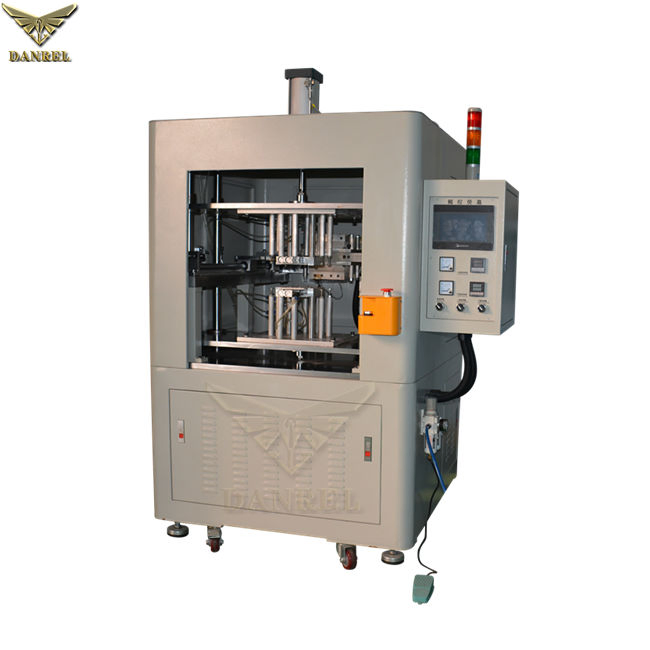
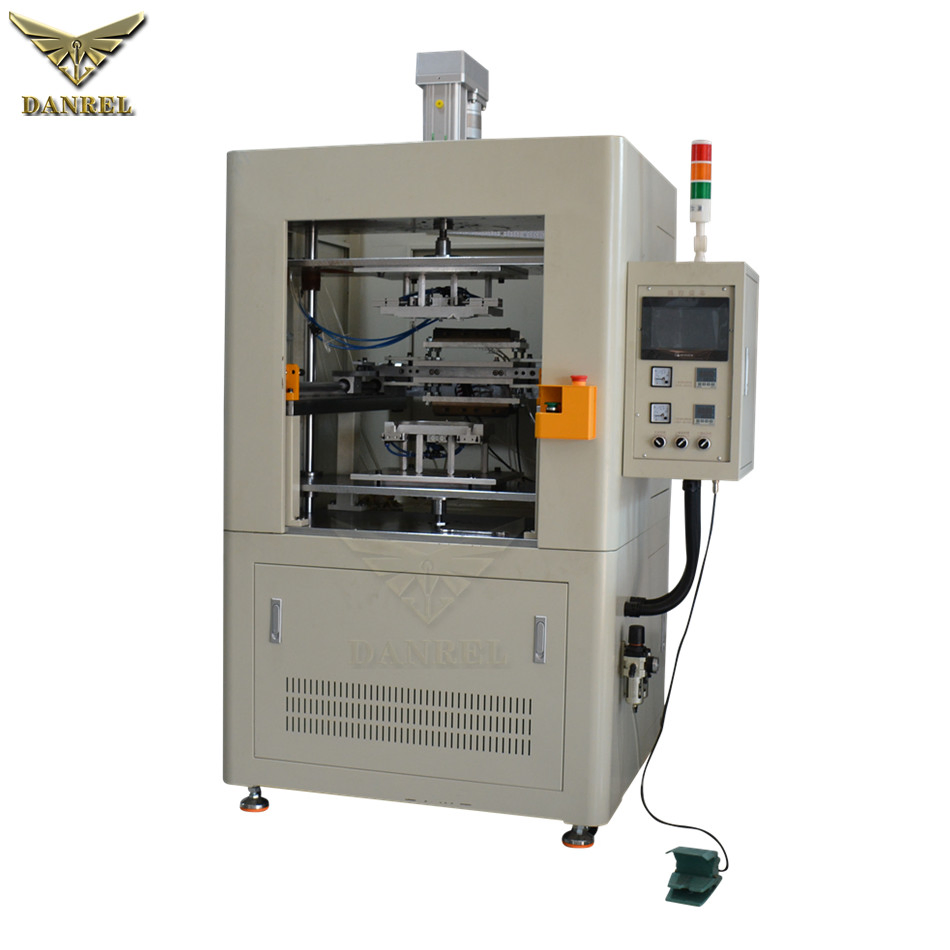
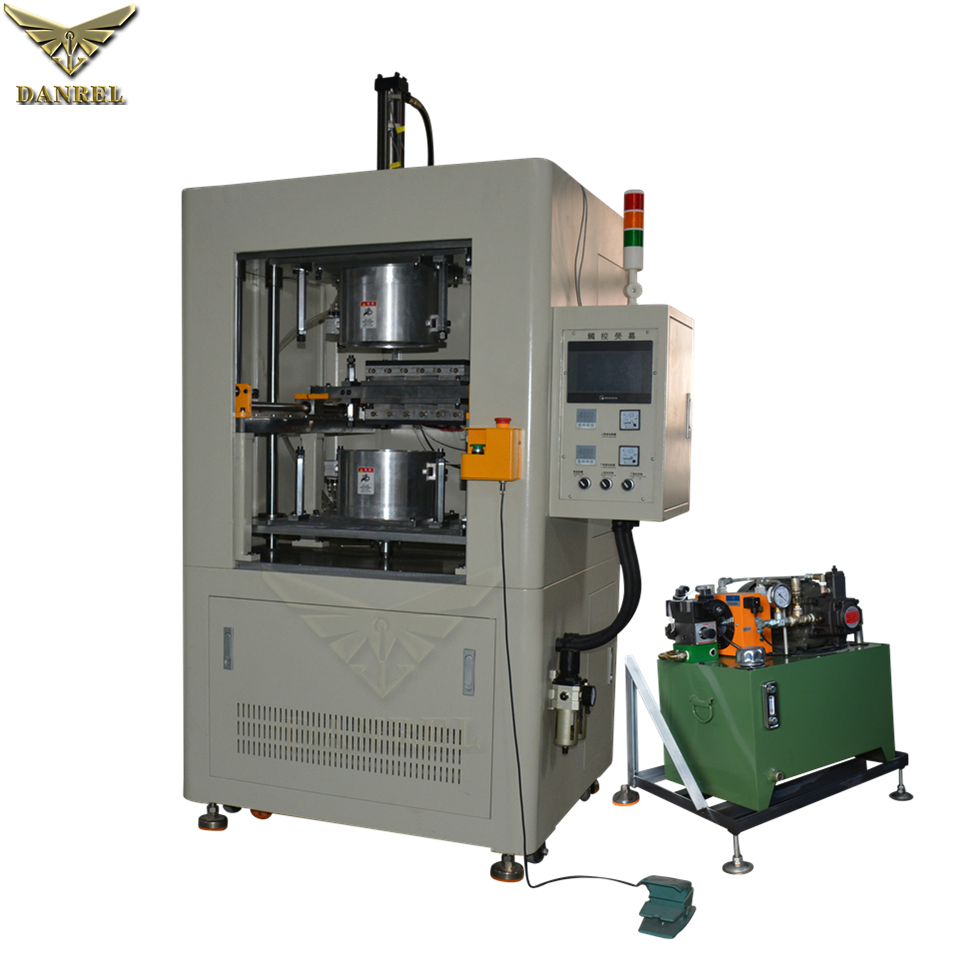
The process of hot plate welding uses a heated platen to melt the joining surfaces of the two halves of a thermoplastic part. The part halves are brought into contact with a precisely heated platen for a predetermined period. After the plastic interfaces have melted, the parts are brought together to form a molecular, permanent, and often hermetic bond.
| Model No | DR-HP420 | DR-HP640 | DR-HP550-Hydraulic |
|---|---|---|---|
| Power | 4KW | 6KW | 4KW |
| Max Heating Size | 350*300MM | 450*300MM | 225*225MM |
| Mold Plate Size | 515*350MM | 555*350MM | 260*240MM |
| Driven Mode | Pneumatic | Hydraulic | Hydraulic |
| Max Pressure | 1000KGS | 30000KGS | 3000KGS |
| Gross Weight | 650KGS | 1200KGS | 1100KGS |
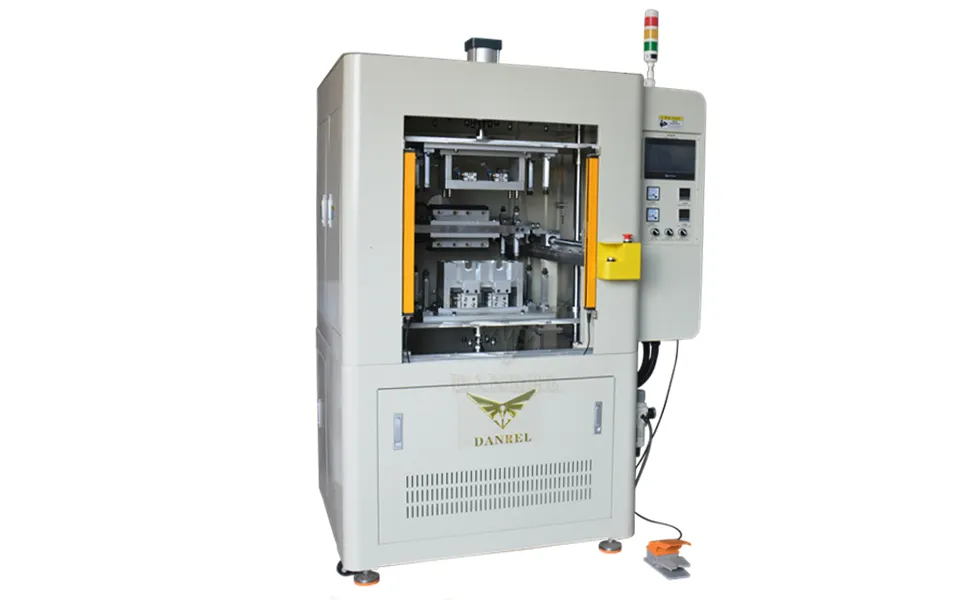
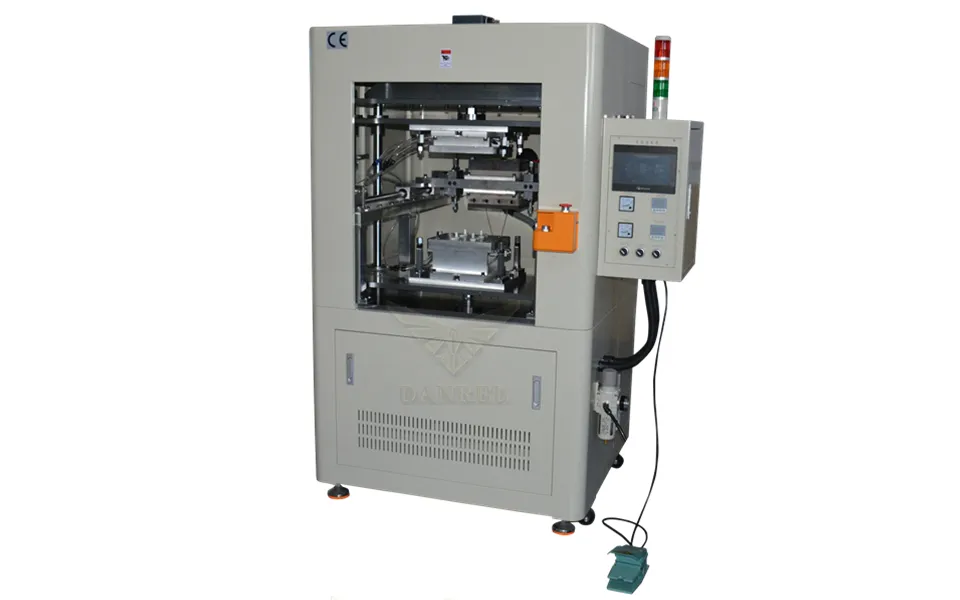
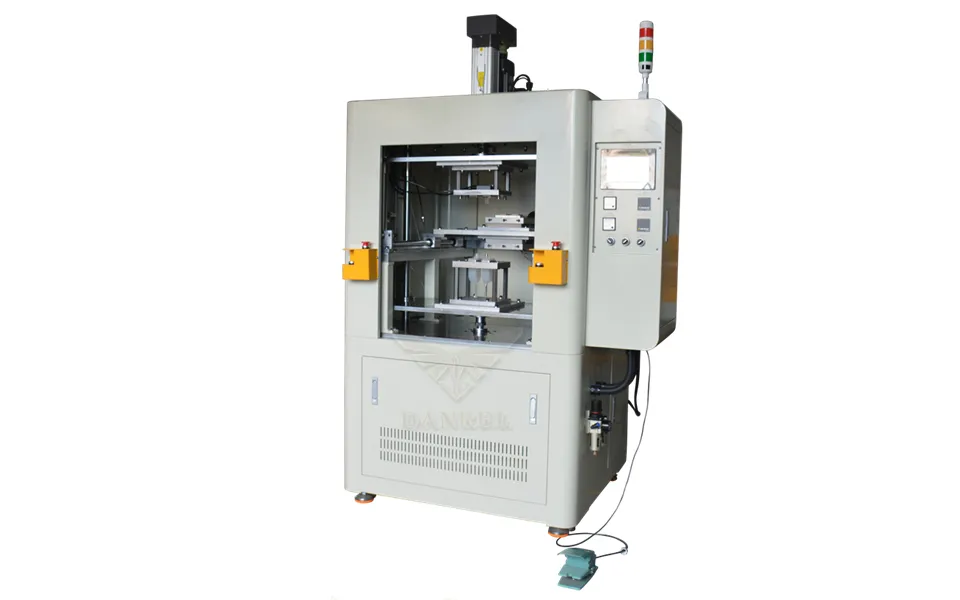
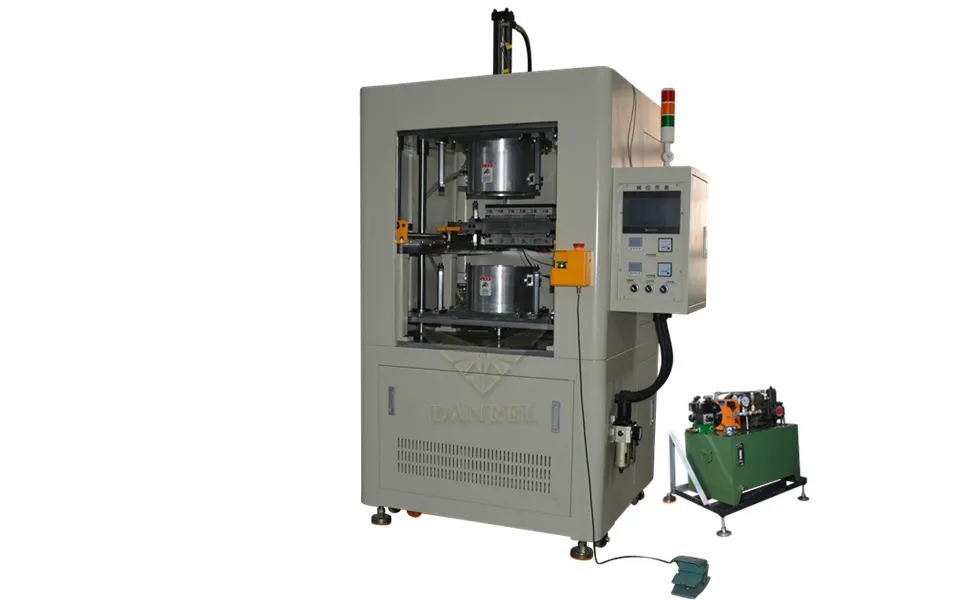
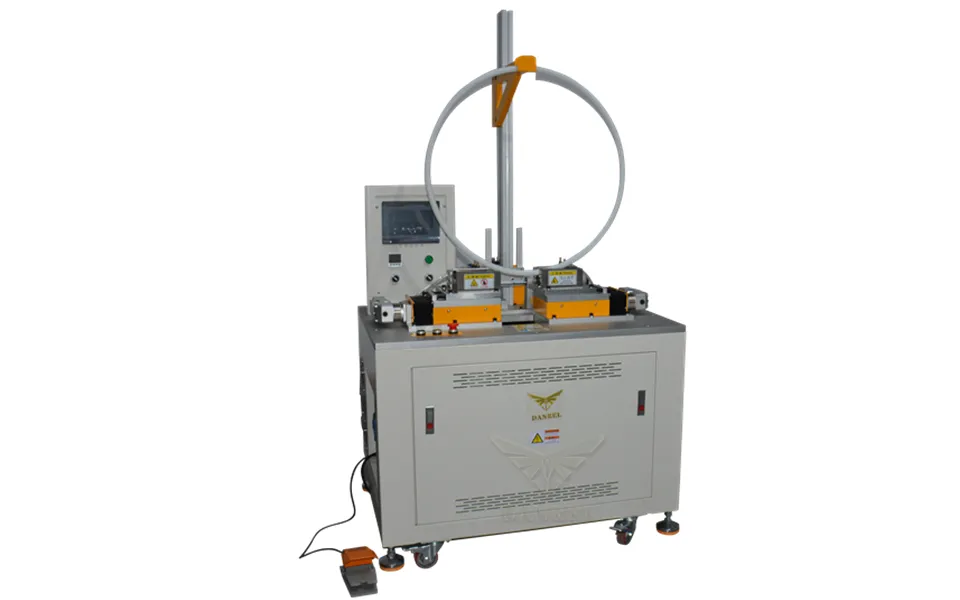
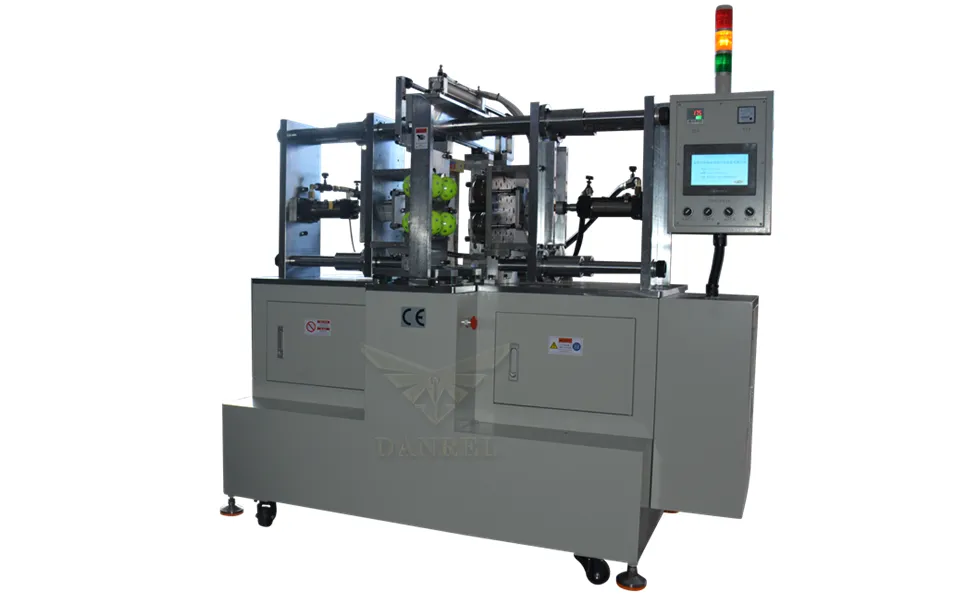
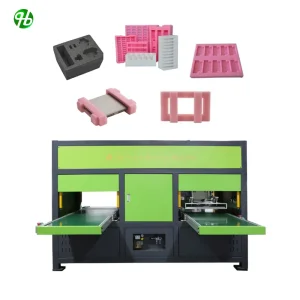
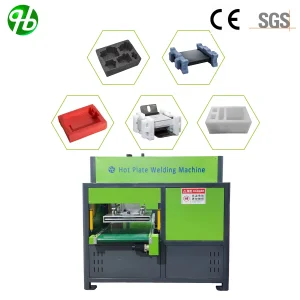
Widely used in thermoplastic welding, including: RO Water Tanks, Rear lights, Tail Lights, Parking Sensors, Bumpers, Truck Water Tanks, Air Springs, Fuel Pumps, Fuel Tanks, Car Radiators, Coolant Reservoirs, Lithium batteries, Solar Water Heaters, Steam Irons, Dashboards, and more.