Enterprise Strength
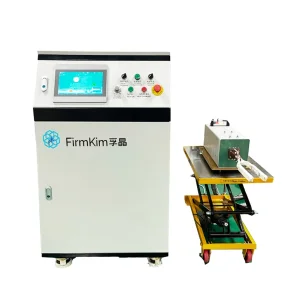
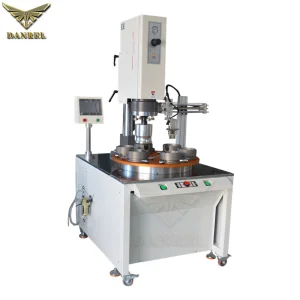
Zhejiang Heping Mechanical Equipment Co., Ltd. is a pioneering manufacturing enterprise integrating plastic welding, non-standard mechanical design, electro-thermal resistance technologies, R&D design, production, sales, and global support. Operating from a state-of-the-art 7,000 square meters manufacturing facility, we specialize in high-capacity mechanical design, precision tooling, and heavy-duty assembly lines customized to meet rigid international structural standards.
Our competitive advantage lies in our absolute commitment to engineering integrity and technological innovation. We hold numerous utility model patent certificates, facilitating deep supply-chain stability and structural engineering support for Fortune 500 manufacturers and global heavy industries alike. Our team comprises industry-leading engineers dedicated to optimizing thermal dynamics, cycle speeds, and mechanical longevity.

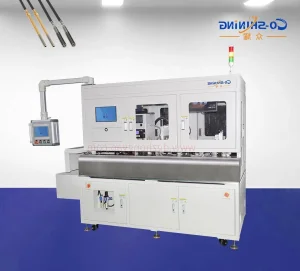
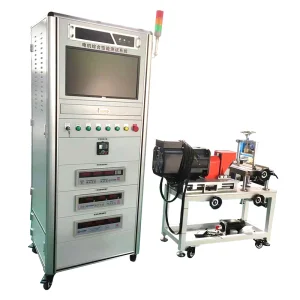
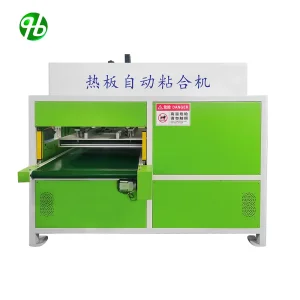
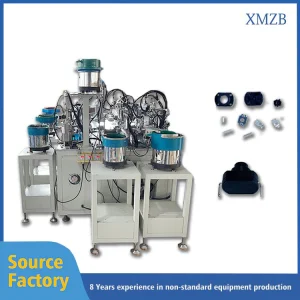
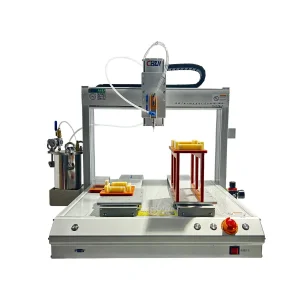
We possess strong capabilities in the design, R&D, and production of non-standard mechanical products, and can customize various special-purpose mechanical equipment according to customer needs.
We strive to let customers share our core advantages: high quality, excellent service, and impeccable welding performance, enabling you to operate without worries in highly competitive global markets.
Our technical team comprises highly skilled and experienced engineering personnel who provide professional, efficient, and comprehensive after-sales service to resolve your production concerns.
Our commitment to intellectual property protection and rigorous testing is validated by multiple national utility patents. These certifications ensure our custom resistance welders and automation solutions are engineered with advanced mechanics and high safety profiles.
ZL202420005404.9 | ZL202420005354.4 | ZL202420005309.9 | ZL201921574530
Resistance welding is a foundational process in modern manufacturing, operating at the intersection of electromagnetic induction, heat transfer, and metallurgical consolidation. By leveraging Joule heating, where passage of electric current through contacting metal workpieces generates a localized weld nugget, resistance welding eliminates the need for filler metals and shielding gases. The heat generated is mathematically defined as:
Where Q represents heat energy, I represents welding current, R is the total electrical resistance (including contact resistance at the electrode-to-sheet and sheet-to-sheet interfaces), and t is the duration of current application. For heavy-duty applications, such as structural steel joining, automotive structural pillars, and thick-plate aerospace component fabrication, control of these parameters must be precise to avoid expulsion, cracking, and incomplete fusion.
In high-capacity systems, Medium Frequency Direct Current (MFDC) and high-current Capacitor Discharge (CD) systems have largely superseded traditional single-phase Alternating Current (AC) systems. MFDC technology rectifies three-phase AC input to high-frequency AC (typically 1000Hz to 4000Hz) before transforming and rectifying it to stable, low-ripple DC current. This results in highly uniform energy distribution, minimal inductance losses, and significantly lower energy draw on the local grid. For heavy-duty resistance spot welding, projecting welding, and seam welding, managing contact resistance ($R$) is critical. As mechanical force is applied via heavy-duty pneumatic or servo-driven actuators, surface asperities are flattened. Our systems optimize the dynamic force profile to match the melting rates of the materials being joined.
The resistance welding industry is undergoing a digital transformation. Systems are shifting from open-loop, timer-based controls to closed-loop, adaptive process control architectures. The technical roadmap of Zhejiang Heping Mechanical Equipment Co., Ltd. focuses on three core pillars:
This closed-loop feedback mechanism is essential for welding advanced high-strength steels (AHSS), ultra-high-strength hot-stamped steels (USIB), and lightweight aluminum alloys. Aluminum, due to its low resistivity and high thermal conductivity, requires substantial welding currents within short weld times. Our heavy-duty systems manage this thermal curve to prevent electrode contamination and metallurgical porosity.
Heavy-duty resistance welders are core components across several heavy industries. Our OEM services provide optimized equipment configurations tailored to specific industrial challenges:
Automotive and E-Mobility: In modern electric vehicle (EV) manufacturing, joining battery pack structures, copper busbars, and multi-alloy structural body-in-white (BiW) assemblies demands high repeatability. Our heavy-duty projection welders join structural fasteners to high-strength press-hardened steel without compromising mechanical integrity or causing heat distortion.
Heavy Infrastructure and Railway Engineering: Joining railway structural beams, steel grating, and reinforcing bar cages requires continuous-duty welding systems. Our heavy-duty flash butt welding and cross-wire projection welding machines are engineered to operate continuously (100% duty cycle) under extreme ambient temperatures.
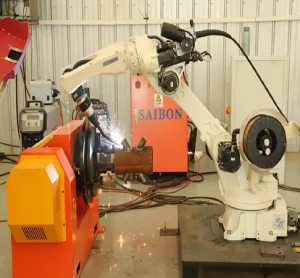
Filtration, Structural Containment, and Safes: Automated manufacturing lines for secure safes, heavy filtration systems, and pressurized vessels rely on robust, leak-proof structural joints. Our multi-axis automated welding lines integrate robotic material handling with multi-point resistance welders to output precision-welded products with high structural yield strength.
Zhejiang Heping Mechanical Equipment Co., Ltd. designs and manufactures equipment according to global industrial directives and standards. International compliance is critical for seamless integration into overseas factories:

Our 7,000 square meter factory in Zhejiang serves as a centralized hub for advanced machining, assembly, and testing. Utilizing localized raw material sourcing, we manage costs and control component quality from raw steel plate to finalized automated assemblies.
By housing CNC milling, precision laser cutting, automatic tapping, laser engraving, and high-precision testing under one roof, we eliminate intermediate transport delays. This integrated structure allows us to maintain a stable, resilient production schedule regardless of global supply chain volatility.
Each custom OEM project undergoes structured debugging and mechanical stress testing prior to packaging, ensuring the machine arrives at your facility ready to run.


Procurement departments evaluating heavy-duty resistance welding machinery must analyze parameters beyond initial capital costs to assess Total Cost of Ownership (TCO) and long-term ROI. Key operational factors include:
Does the facility's power supply align with the machinery's peak demand? Standard single-phase welders can cause voltage drops. High-capacity MFDC systems distribute loads across three phases, balancing grid impact.
Electrode deformation (mushrooming) affects weld consistency. Advanced pneumatic/servo control systems maintain precise forces to extend electrode lifespan, reducing maintenance downtime.
Modern production facilities require integration with factory Execution Systems (MES). Our systems support OPC UA, Profinet, and Ethernet/IP protocols for comprehensive data tracking and quality control.
Through close consultation during our R&D design phase, Zhejiang Heping helps international procurement teams determine optimal machine configurations. By matching transformers, force actuators, and custom tooling to the specific metallurgy of workpieces, we ensure the equipment integrates into existing production workflows.
MFDC (Medium Frequency Direct Current) systems operate at much higher frequencies (typically 1000Hz+) compared to standard 50/60Hz AC systems. This results in significantly smaller, lighter welding transformers that can be integrated directly onto robotic arms. Additionally, MFDC offers a highly stable DC welding current with negligible ripple, reducing heat-affected zones, energy consumption, and cycle times while extending electrode life.
Our dedicated engineering department designs custom jigs, fixtures, and copper electrodes matching your design drawings. Using advanced 3D modeling and stress simulation software, we model the electrical path and physical stress constraints of the workpiece. This ensures balanced heat generation and precise mechanical positioning for complex multi-point projection and spot welding configurations.
We hold multiple utility patents (e.g., ZL202420005404.9, ZL202420005354.4, ZL202420005309.9, and ZL201921574530) covering proprietary technologies in plastic welding, mechanical structural designs, and automated testing assemblies. These patents ensure that our machinery is constructed using unique engineering designs that optimize energy transmission efficiency, minimize structural flex during clamping, and prevent component failure.
Quality control starts with material reception. All incoming metals, pneumatic cylinders, and electrical components undergo standard inspections. We perform precise component fabrication in-house using CNC machining, milling, tapping, and laser cutting. Finally, we run full cycle tests under load to verify that all systems meet the defined force and current parameters before shipping.
 Heping Mechanical